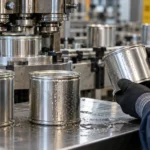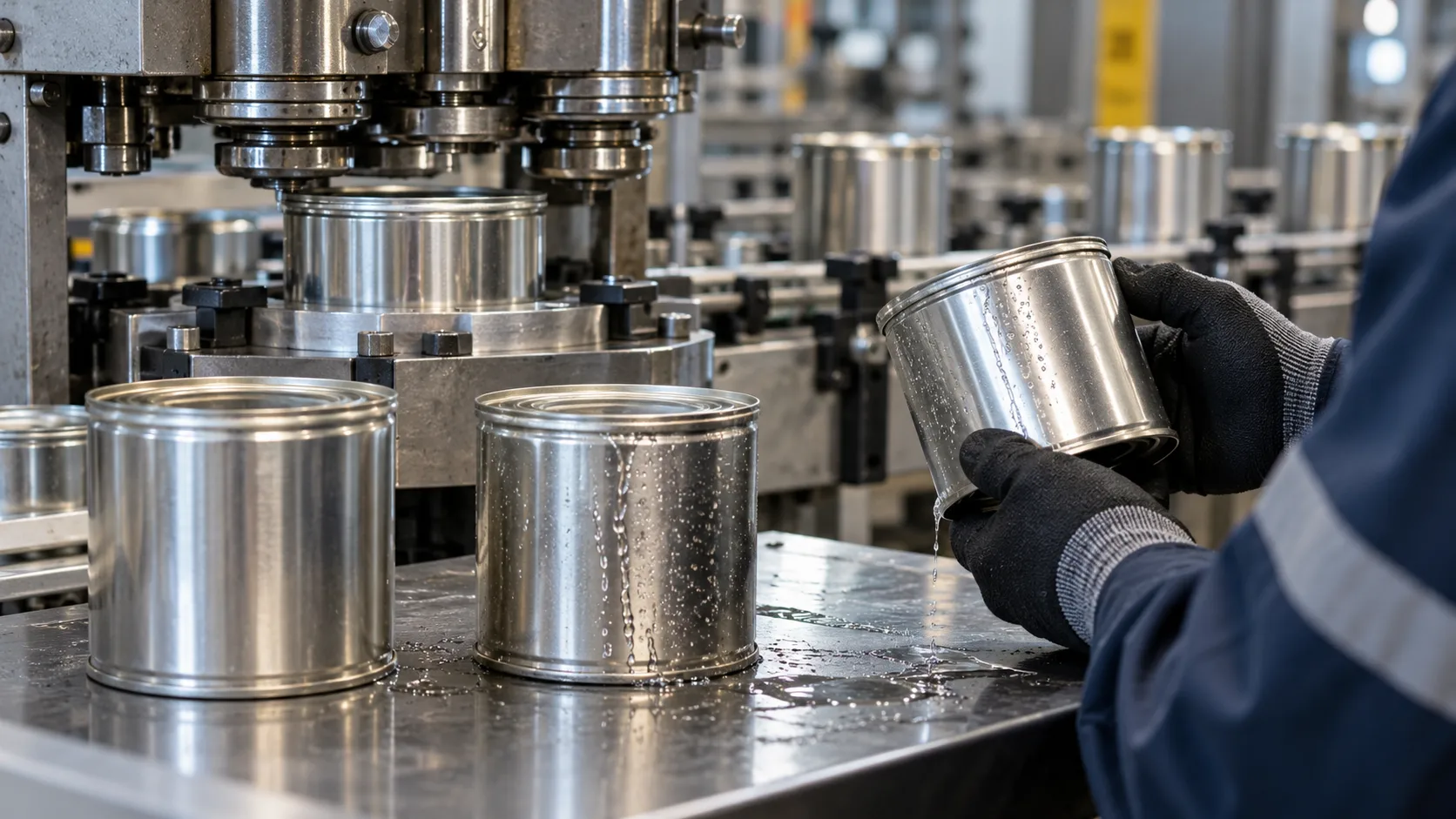
After production, a batch of tin containers appears to be flawless. It looks like the lids have been securely placed, the edges are even, and it’s ready for shipping. Next up, the leakage test and some containers leak.
This is wasted materials and unscheduled production delays for manufacturers, and rejected products for all. Although damaged can bodies or defective ends can cause the problem, it is sometimes necessary to investigate at the seam machine itself.
The integrity of containers depends on a well formed seam. Minor differences in the joining process can generate weak areas which may not show during regular checks.
Why Do Tin Containers Leak Even When the Lids Look Properly Sealed?
A closed lid may not provide a reliable seam.
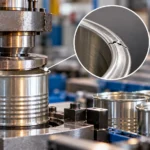
In a lot of metal can applications, the end is joined to the body by a mechanical double-seaming method. The flange of the can and the end curl are folded together to form a double seam.
The closure may fail under some conditions if the components do not engage properly.
There are a number of causes for leakage:
- Inadequate seam overlap: If the seam is not sufficiently overlapped or engaged, it can be weak.
- Damaged Can Flanges: Bent or uneven edges may not be able to join.
- Worn seaming rolls: Tool wear can impact the seaming process and quality.
- Machine adjustment: If these settings are incorrect, then the seams produced may be outside of the required specifications.
- Material variations: Variations to can body or end dimensions may have an impact on the sealing process.
The sealing compound, if used, also is a major contributor. A seamed joint, per se, is not a leakproof joint.
What Are the Warning Signs of a Poor Seaming Process?
Leakage is a major issue that is usually found when the product is tested, but it also can have other indications in the production environment.
1. Uneven Seams Around the Container
A well adjusted seaming procedure should result in a seam around the container to the correct dimensions.
If one section looks significantly different, the machine setup or tool alignment or the alignment of the container can be looked at.
Similar containers that have been repeatedly rejected.Repeatedly rejected similar containers.
2. Repeated Rejection of Similar Containers
If the failures are occurring repeatedly in the same can size, the same production batch should be the subject of attention.
Defects may not be random, but may be related to the dimensions of materials, machine adjustments or tool compatibility.
3. Visible Wrinkles or Deformed Edges
But sometimes wrinkles and irregularities are signs of a seam formation problem.
But, just by looking at an appearance, it cannot be determined whether a seam is to specification or not. Appropriate testing still needs to be done for measurements.
4. Leakage After Handling or Transport
All containers that look good on the surface can leak when handled if their lids are not properly made.
Manufacturers need to consider seam quality and potential damage in future processing.
How Can Manufacturers Identify the Actual Seaming Problem?
Replacing machinery immediately is rarely the right first response.
A better approach is to examine the failed containers and identify where the sealing process differs from the required specifications.
Start with the rejected samples.
Compare failed containers with acceptable ones from the same production run. Check whether the problem affects every container or appears intermittently.
Next, review the following areas:
- Can body and end dimensions: Confirm that components meet the intended specifications.
- Seam measurements: Examine relevant dimensions and overlap using suitable inspection methods.
- Tooling condition: Check for wear, damage or incorrect tooling selection.
- Machine setup: Have trained personnel verify adjustments against the equipment manufacturer’s instructions.
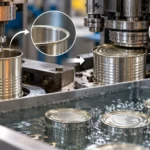
- Leakage test conditions: Confirm that the testing method is appropriate and consistently applied.
A qualified technician should carry out mechanical adjustments. Incorrect changes can make seam defects worse or damage equipment.
Can an Automatic Seam Machine Reduce Leakage Problems?
Repeatability is improved with automation, but it can’t fix bad materials or bad machine configurations.
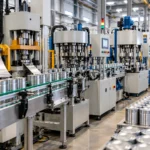
A machine that folds and seals automatically is called an automatic seam machine. If properly set up and managed, it can be used to minimize the manual handling variations.
This is especially important for manufacturers who routinely make large quantities of containers that have a set specification.
However, the quality of the seam should be checked by the operators.
In addition to automation, routine inspections, proper maintenance and timely tooling changes are still critical, no matter how automated the system is.
The key to a reliable production process is not just the machinery, but also the quality control measures taken.
When Should Manufacturers Consider Replacing Their Seaming Equipment?
Not every leakage problem requires a new machine.
If the existing equipment can produce acceptable seams after maintenance or adjustment, replacement may be unnecessary.
However, manufacturers should review their machinery when:
- Seam defects continue despite proper maintenance.
- Important components show excessive wear.
- Required can dimensions are incompatible with existing tooling.
- Production requirements exceed practical machine capacity.
- Repeated mechanical problems cause significant downtime.
At this stage, consulting a seaming machine manufacturer in India can help businesses understand the equipment options available for their production requirements.
The discussion should focus on can specifications, operating capacity, tooling compatibility and maintenance needs.
What Should You Ask Before Selecting a Seaming Machine?
When buying equipment, it’s more than just production speed.
Manufacturers should define the size, material and sealing of the containers before buying.
Any good seaming machine manufacturer in India will be able to describe the facts regarding the machine and assist the customers in determining the appropriate machine.
Manufacturers should also inquire about operating needs, tool changeovers and routine maintenance.
The goal is to choose the machines that are able to produce a consistent seam under the planned production conditions.
Reliable Seaming Starts With the Right Process
Failure due to leakage should never be considered a trivial production problem. A manufacturer can investigate material quality, condition of the tools, and seam machine performance to determine the root cause, and avoid the additional impact of more containers being affected.
Tinmaco (Unity Metals) produces automatic and semi-automatic metal can seaming machines. Check out our equipment lineup and select the machines that can be used for your containers and production needs.
Frequently Asked Questions
1. What is the most common cause of leakage in tin containers?
Seam failure, failure of container parts, or sealing compound issues, and faulty machine settings can lead to leakage. The true cause needs to be determined by inspection and appropriate testing.
2. Can a seaming machine produce defective seams without visible damage?
Yes. There are some seam defects that you can’t see without slicing open the seam. Manufacturers may require dimensional measurements, seam examination and leakage testing for identification of problems.
3. How often should seaming machines be inspected?
Frequency of inspections depends upon machine specifications, production conditions and maintenance recommendations. Routine checks by operators and maintenance according to the maintenance schedule of the equipment manufacturer.
4. Does an automatic seaming machine guarantee leak-proof containers?
Process consistency can be enhanced by automatic machinery, but sealing compound and quality control, as well as material quality, correct tooling, and machine settings, also play a part in achieving leak tight performance.
5. What should manufacturers check before buying a new seaming machine?
The manufacturers should consider supported can sizes, material suitability, production capacity, tooling requirements, maintenance and technical support before deciding on equipment.