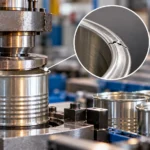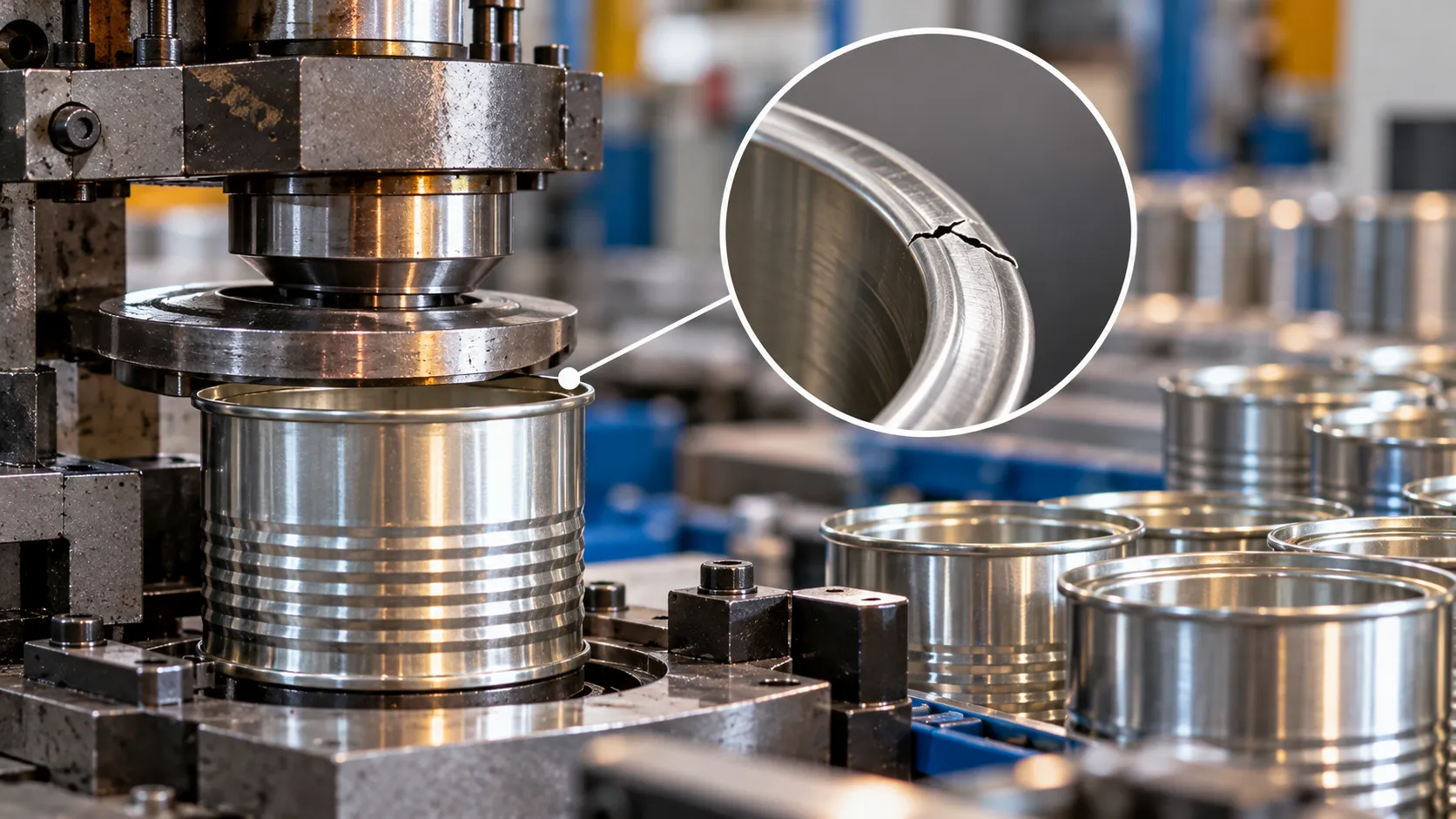
A tiny crack along the rim of a tin can may not look serious during production. The container still holds its shape, and the damaged area might be barely visible. But once that can reaches the seaming stage, the same crack can create problems with the final closure. For manufacturers handling large production batches, ignoring these early defects can lead to rejected containers, material waste and additional inspection work. The condition of the can edge and the settings of the flanging machine deserve attention long before the lid is attached.
Edge cracking is more than a surface defect. It can indicate that the metal has been stretched beyond what it can safely withstand during forming.
What Happens to Metal Edges During Flanging?
Flanging involves bending the open edge of a metal can body outward to create the flange required for seaming.
During this operation, the metal experiences deformation. The outer portion of the bend is subjected to tensile strain, while other areas experience compression.
When the material cannot accommodate the required deformation, small cracks may develop along the formed edge.
The likelihood of cracking depends on several factors, including material properties, sheet thickness, tooling geometry and forming conditions.
A properly selected and adjusted flanging machine helps control the forming operation, but the condition of the incoming material remains equally important.
Where Do Edge Cracks Usually Begin?
Cracks do not always appear uniformly around a can.
They may develop at areas where the metal experiences greater strain or where existing damage creates a weak point.
Production teams should pay particular attention to:
- Cut edges: Burrs, notches or rough edges can act as starting points for cracks.
- Body side seams: The area around a welded or otherwise joined side seam may behave differently during forming.
- Uneven flange sections: Localised stretching can increase the risk of material failure.
- Previously damaged areas: Small dents or edge defects may become more noticeable during flanging.
The location and appearance of a crack can provide useful clues about its cause.
However, visual inspection alone may not identify every defect.
Why Can Edge Cracking Become a Serious Production Problem?
A cracked flange can affect more than the appearance of the container.
The Seaming Process May Become Unreliable
During double seaming, the can body flange must engage correctly with the can end curl.
If the flange contains cracks, the damaged material may interfere with proper seam formation.
This can affect the integrity of the finished closure, depending on the crack location and severity.
Rejected Containers Increase Material Waste
A container that develops a crack during flanging may already have passed through several manufacturing operations.
Rejecting it at this stage means the materials and processing time invested in that component may be lost.
If defects are discovered only after seaming, additional production resources may also be wasted.
Small Defects Can Affect Entire Batches
An isolated crack may result from damage to a single can body.
Repeated cracking at similar locations, however, can indicate a wider problem involving tooling, material properties or machine setup.
Continuing production without investigating the pattern may result in more defective containers.
What Causes Edge Cracking During Flanging?
There is rarely one explanation that applies to every manufacturing operation.
Several conditions can contribute to cracking.
- Limited material formability
Some metal grades cannot tolerate the same degree of deformation as others. Material hardness, previous processing and mechanical properties can influence cracking behaviour.
- Excessive forming strain
Attempting to form an unsuitable flange profile or bend radius may stretch the metal beyond its available ductility.
- Damaged or worn tooling
Tooling wear, rough contact surfaces or incorrect geometry can concentrate strain in particular areas of the flange.
- Poor edge preparation
Burrs, scratches and other cutting defects can increase the likelihood of cracks developing during forming.
- Incorrect machine setup
Misalignment or unsuitable operating adjustments may produce uneven deformation around the container edge.
Manufacturers should investigate these factors before deciding whether the problem lies with the material or equipment.
How Can Manufacturers Reduce Edge Cracking?
Preventing cracks requires attention to both incoming components and the forming process.
A useful approach is to establish inspection checks at different production stages.
Before Flanging
- Inspect can body edges for burrs, dents and visible damage.
- Confirm that material thickness and grade meet the required specifications.
- Check whether the tooling matches the intended can dimensions.
During Production
- Monitor flange formation for unevenness or visible cracking.
- Follow approved machine settings and operating procedures.
- Watch for repeated defects appearing at similar locations.
After Flanging
- Examine finished flanges before sending containers for seaming.
- Separate defective components for further investigation.
- Record recurring defects to identify possible production patterns.
Maintenance is equally important. A flanging machine should be inspected according to the manufacturer’s recommendations, with worn or damaged tooling addressed by qualified personnel.
When Should Manufacturers Review Their Flanging Equipment?
Occasional defects do not automatically mean a machine needs replacement.
However, repeated cracking despite suitable material quality, correct tooling and proper maintenance deserves closer investigation.
Manufacturers should review whether their equipment can consistently handle the required can dimensions, material properties and production conditions.
A machinery assessment may help determine whether adjustments, tooling changes or equipment upgrades are appropriate.
Protecting Can Quality Starts at the Edge
Edge cracking should be addressed before defective can bodies reach the seaming stage. Early inspection, suitable materials and controlled forming conditions can help reduce avoidable production losses.
Tinmaco (Unity Metals) manufactures flanging machine equipment for metal can production applications. Explore our machinery range to find equipment suited to your can manufacturing requirements.
Frequently Asked Questions
1. What causes cracks during tin can flanging?
Cracks may result from limited material formability, excessive forming strain, damaged tooling, rough cut edges or incorrect machine adjustments. The exact cause depends on the material and forming conditions.
2. Can a cracked flange affect the sealing of a tin can?
Yes. A cracked flange can interfere with proper seam formation and may affect container integrity. Defective components should be inspected and assessed before further processing.
3. How can manufacturers identify edge cracking early?
Routine visual inspections, suitable magnification where necessary and dimensional checks can help identify cracking before containers move to the seaming stage.
4. Does increasing flanging speed cause edge cracks?
Higher operating speeds can influence forming conditions in some applications, but speed alone does not determine whether cracking occurs. Material properties, tooling geometry and machine settings must also be considered.
5. Should manufacturers replace their flanging equipment if cracks appear?
Not immediately. Manufacturers should first examine material quality, tooling condition, edge preparation and machine adjustments. Replacement may be considered when existing equipment cannot reliably meet production requirements.