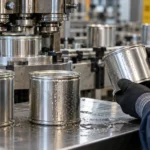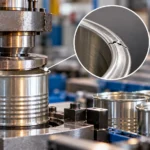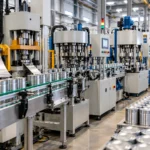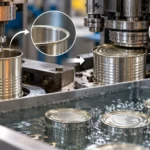
Several machines may be operating in the factory during the day and still fall short of production goals! One machine completes its task in a short time and the other machine takes a longer time. Unfinished cans are delivered from one station to the next by workers; and these minor delays build up over time, causing the whole shift to be delayed.
When all the tin can manufacturing machines are working independently, this is a frequent problem. To overcome these problems, some manufacturers are now looking at complete production lines where various manufacturing processes are linked together in a more organised process.
This decision is not always made for the sake of replacing the existing equipment. In many instances, manufacturers want better machine-to-machine coordination, in addition to less interruptions and increased control in production.
What Happens When Tin Can Machines Work Independently?
Metal can manufacturing is the use of individual machines. There may be different machines in a factory to form, flange, seam, etc.
This may be satisfactory as long as production volumes are not too large or when changing can specifications is common.
When the production requirement grows, but the factory layout does not, problems occur.
A flanging machine, for instance, could be turning out can bodies quicker than another station can accept them. The parts are not finished, so operators have to deal with the surplus material.
Over time, manufacturers may experience:
- Production flow not all even: Machines are sometimes idle, other machines have to wait for materials.
- Extra handling: Personnel repeatedly move parts from station to station.
- Increased risk of damage: Frequent handling can lead to an increased risk of damage, such as dents or misalignment.
- Production tracking is difficult: Managers may not be able to pinpoint the sources of delays.
- Space management issues: Uncompleted materials are using up the valuable space in the factory floor.
All these problems will make manufacturers think again about the arrangement of their tin can making machine.
Why Are Complete Production Lines Becoming an Alternative?
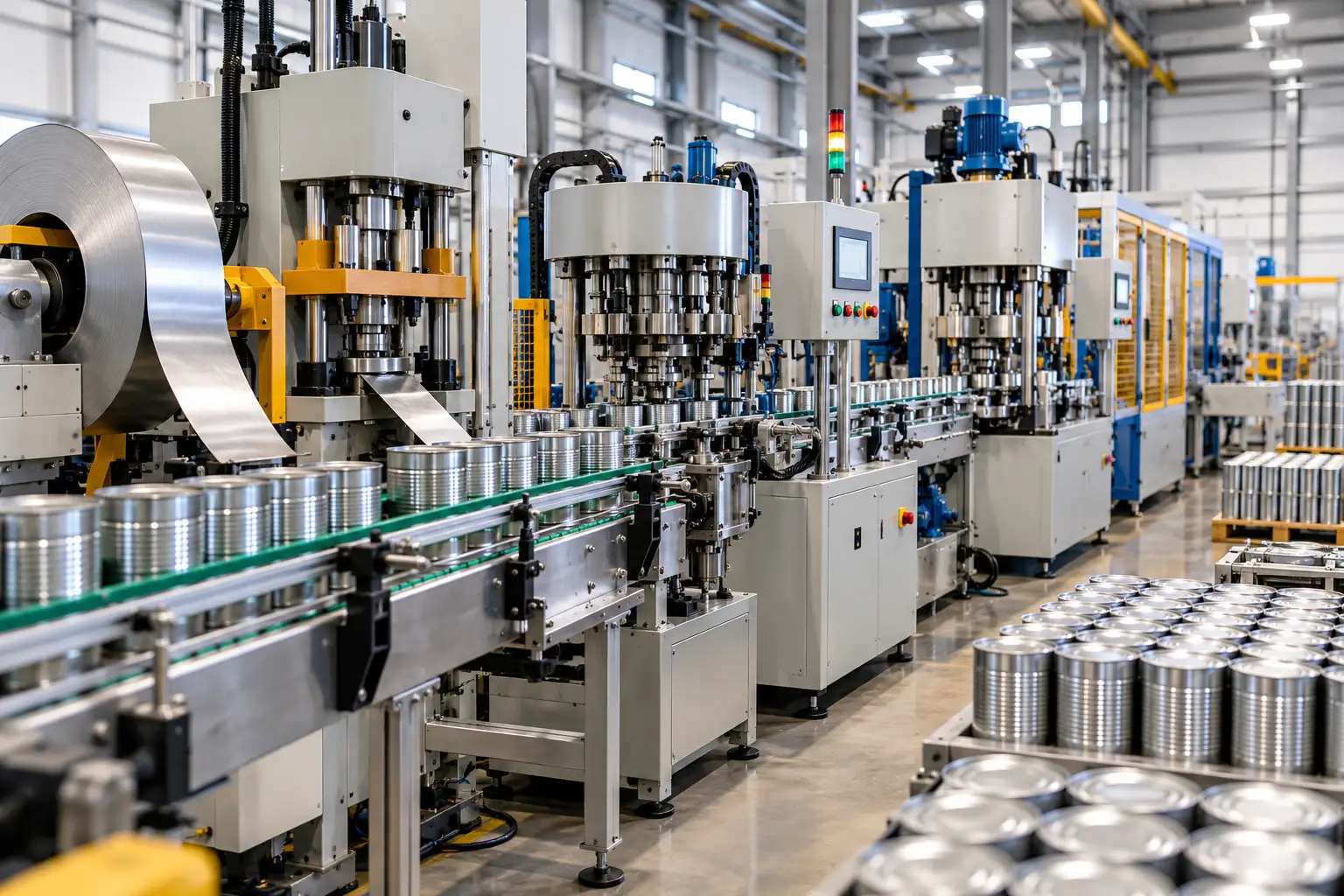
A complete production line brings compatible manufacturing operations into a coordinated arrangement.
Instead of treating every machine as an independent workstation, the production process is planned around the movement of materials from one stage to another.
The main advantage is coordination.
1. Production Moves Through a More Organised Sequence
In a properly designed line, components move between connected operations with less unnecessary handling.
This can reduce waiting time and help operators maintain a more consistent workflow.
However, the line must be designed around the actual production requirements. Simply connecting machines does not guarantee better efficiency.
2. Bottlenecks Become Easier to Identify
Consider a factory where one machine processes 60 components per minute while the next handles only 40.
Even if both machines operate correctly, the slower station limits the overall output.
An integrated production arrangement makes such capacity differences easier to evaluate during planning.
Manufacturers can then select compatible equipment or adjust their processes to reduce avoidable delays.
3. Material Handling Can Be Reduced
Repeatedly moving unfinished cans between machines requires time, space and labour.
A coordinated production line can reduce some of these movements through suitable transfer arrangements.
This becomes particularly relevant when manufacturers handle large production batches with consistent can specifications.
Does a Complete Production Line Always Deliver Better Results?
Not necessarily. This is where equipment selection becomes important.
A complete production line usually requires greater planning, suitable factory space and coordination between different machines.
For a manufacturer producing several can sizes in smaller batches, individual equipment may offer more flexibility.
The right choice depends on how the factory operates.
Individual machines may be more practical when:
- Production volumes are relatively low.
- Different can sizes require frequent setup changes.
- Existing equipment remains reliable and productive.
- Investment budgets are limited.
- Manufacturing operations need independent scheduling.
A coordinated production line may be worth considering when:
- Production volumes are increasing consistently.
- Material handling causes regular delays.
- Several machines process similar can specifications.
- Factory expansion requires a more organised workflow.
- Existing equipment creates repeated production bottlenecks.
The goal should be improving overall manufacturing performance, not replacing equipment simply because newer options are available.
What Should Manufacturers Check Before Changing Their Machinery Setup?
Replacing separate equipment with a complete line is a significant operational decision.
Before investing, manufacturers should examine their existing tin can manufacturing machine specifications and understand how different production stages interact.
Five questions deserve particular attention.
- Is there an integration with the machines? Equipment must be capable of meeting the below CAN size and material and operating conditions.
- What is slowing down the production process? This will prevent the need to replace something that is not the real reason for the loss.
- How often are specifications updated? Regular changes can influence the viability of an integrated solution.
- Is there a possibility to use the current equipment? There is a possibility of putting machines in a more efficient arrangement, or upgrading specific machines, which will help optimize the work process in some factories.
- What maintenance arrangements will be needed? The proper maintenance planning is required for connected operations as a failure in one critical station may affect other operations.
Safety considerations are another important factor for manufacturers to consider when deciding on a new layout, as is access to the machine and floor space available.
Why Does Machine Compatibility Matter More Than Machine Quantity?
The more machines purchased, the more factory output does not necessarily increase.
Sometimes adding another machine may cause additional problems if the equipment runs at different speeds or requires the use of incompatible handling systems.
Thus, it is vital to choose appropriate tin can manufacturing machines to understand the whole production process.
For instance, seaming equipment should be similar to can dimensions, end specifications and production requirements.
This is the same for flanging and other forming processes.
A well-planned arrangement takes into account the contribution of each machine in the production of a product.
Making the Right Machinery Decision
For certain manufacturers, the introduction of a production line can help to streamline the process and minimize wasteful handling. Other users might get more results by improving individual machines, without changing their configuration.
Before buying a new machine for making tins or if the manufacturers want to increase their production capacity, they should understand the requirement for the production, the compatibility of the equipment and their future operating needs.
Tinmaco (Unity Metals) produces automatic and semi-automatic seaming machines, flanging machines and other metal can making equipment. Discover our range of machinery and identify the equipment that will meet your manufacturing needs.
Frequently Asked Questions
1. What is a complete tin can production line?
A complete tin can production line is a sequential arrangement of equipment for various steps in the tin can production. It can consist of forming, flanging, seaming and material handling operations depending on the process.
2. Why do manufacturers replace individual machines with production lines?
Integrated production lines can be an option for manufacturers to decrease the amount of material handling required, coordinate better between the various operations and respond more efficiently to the rising production volumes.
3. Can existing tin can machines be integrated into a production line?
Alternatively, depending on the specification, operating speed, control systems and material handling needs, some of the existing machines can be integrated. To make changes, a technical compatibility assessment is required.
4. Are complete production lines suitable for small manufacturers?
Not all small manufacturers require them, but they may be. If production volumes are low, or can specifications change frequently, individual or semi-automatic equipment is often more suitable.
5. What is the most important factor when selecting tin can production equipment?
It is a critical requirement that the machine is compatible with the required dimensions, materials and production volume of the cans. Equip reliability, maintenance requirements, space available, and overall manufacturing flow are also things to consider for manufacturers.