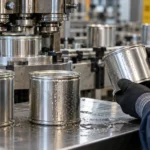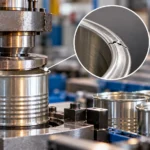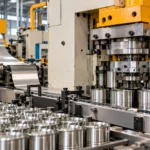
The shape, size and material thickness of a tin can can be correct, and still cause sealing issues during production. It might be because of a previous manufacturing stage that isn’t quite as well known: flanging. The edge of the can body needs to be prepared to the proper dimensions before a can end can be properly attached to the can. Here, a flanging machine is very important that is used to form the flange to be seamed in the following step.
Precision flanging is more than just shaping an edge for metal can manufacturers. It has a direct impact on the sealing of the can body to end.
What Exactly Happens During the Flanging Process?
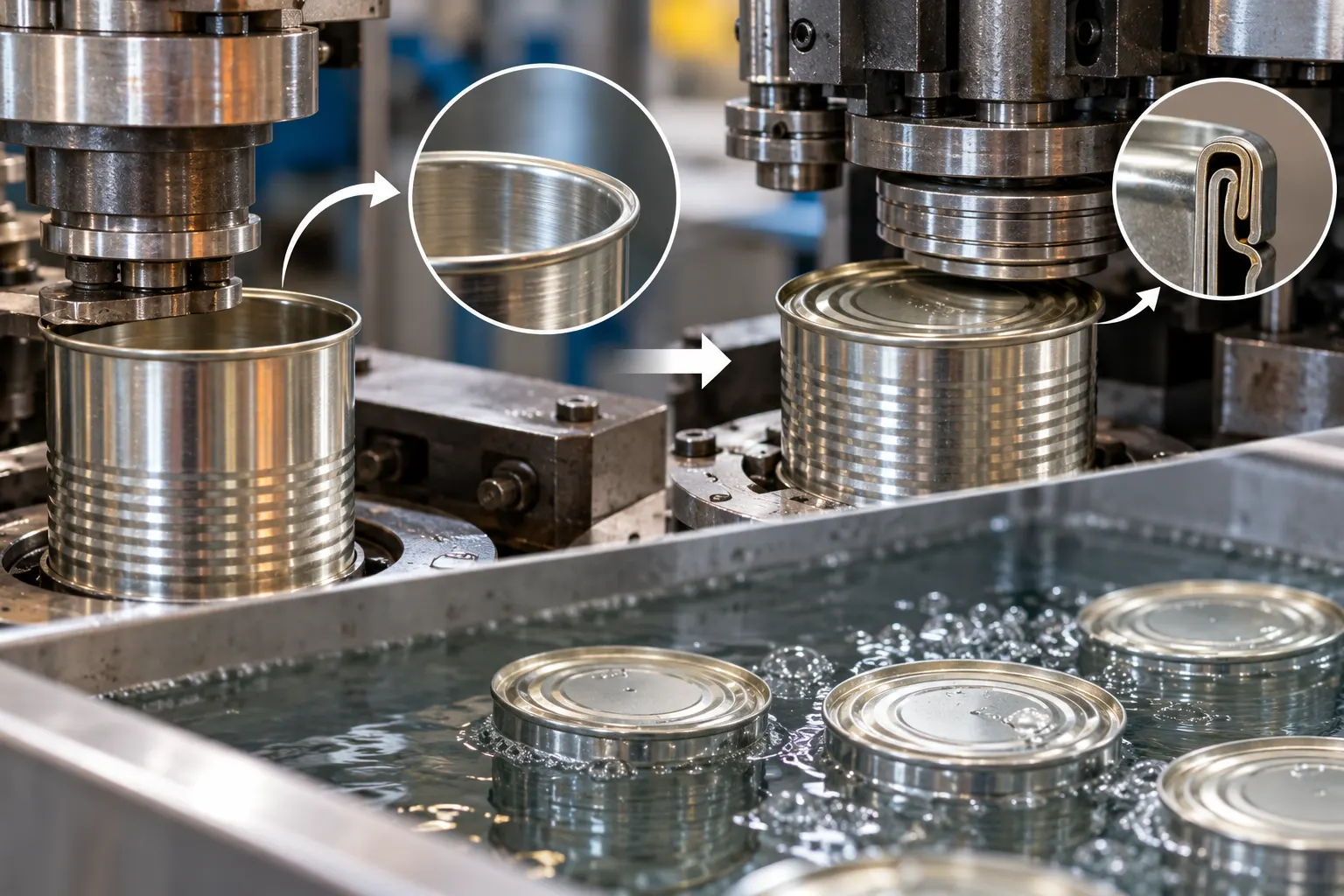
Flanging is the process of forming an outward edge, known as a flange, at the open end of a metal can body.
This prepared edge allows the can body to engage with the curl of the can end during the double-seaming process.
Although the operation may appear straightforward, the flange must meet specific dimensional requirements.
Three characteristics are particularly important:
- Flange width: The formed edge must provide the required material for proper seam formation.
- Uniformity: The flange should remain consistent around the circumference of the can.
- Edge condition: Cracks, distortion or damaged edges can interfere with the subsequent sealing operation.
A correctly adjusted flanging machine helps produce the required edge profile while limiting unnecessary variation between containers.
Why Does a Small Flanging Error Become a Bigger Seaming Problem?
Consider two can bodies moving towards the seaming station.
Both appear identical from a distance. However, one has a properly formed flange, while the other has a slightly uneven edge.
During seaming, the can end curl and body flange must fold together in a controlled manner.
The correctly formed flange provides the material needed for proper engagement. The uneven flange may interfere with this process.
Depending on the defect, the result could be insufficient body hook formation, seam irregularities or a closure that fails inspection.
This explains why seaming problems cannot always be solved by adjusting the seaming machine.
Sometimes, the defect originates before the container reaches that stage.
How Does Precision Flanging Affect Tin Can Quality?
Understanding the challenges faced by manufacturers while producing flanged and seamed containers adds more clarity to the relationship between the two.
1. It Supports Proper Seam Formation
The body flange will aid in the forming of the body hook during double seaming.
A too short flange, damaged or inconsistent, may lead to a seam that is not up to standard.
Precision flanging assists to set up the can body for the desired joining method.
2. It Reduces Avoidable Production Rejections
Flanging and seaming are two different processes and are closely related.
If a can body is prepared outside of the specified dimensions, even if the seaming equipment is operating properly, it may cause problems.
Therefore, dimensional compatibility is crucial in the choice and tuning of production machines.
3. It Improves Compatibility Between Manufacturing Operations
Flanging and seaming are separate processes, but their requirements are closely connected.
A can body prepared outside the specified dimensions may create difficulties even when the seaming equipment is functioning correctly.
This makes dimensional compatibility essential when selecting and adjusting production machinery.
4. It Helps Maintain Consistency Across Production Batches
Manufacturers producing large quantities of similar containers need repeatable forming operations.
A suitable flanging machine, operated under the correct conditions, can help maintain consistent flange profiles throughout production.
However, regular inspection remains necessary because tooling wear and material variations can affect results.
What Causes Poor Flanging in Tin Can Manufacturing?
Not every flange defect indicates a serious machine failure.
Sometimes, the problem develops gradually as operating conditions change.
Common contributing factors include:
- Worn forming tools: Repeated use can affect the accuracy of the formed edge.
- Setups: Improper setups may result in flanges that are not within tolerances.
- Forming behaviour may be affected by differences in metal thickness or properties.
- Misaligned can position: This can cause differential flange formation when the cans are processed.
- Damaged can bodies: If there is existing deformation it can affect accurate edge forming.
Changes in the machine settings or component replacement should be the last step after the actual cause is determined.
What Should Manufacturers Inspect Before Sending Cans for Seaming?
Flange inspection should be part of routine production quality control rather than an activity performed only after sealing failures occur.
Before containers move to the seaming stage, operators should verify:
- Flange dimensions: Confirm that the formed edge meets the specified width and profile.
- Circumferential consistency: Check for uneven or incomplete flange formation.
- Visible damage: Look for cracks, sharp distortions or damaged edges.
- Can body condition: Ensure that the container remains properly shaped after forming.
- Tooling condition: Follow the recommended inspection and maintenance procedures.
These checks help identify problems earlier, before additional manufacturing operations increase the cost of rejection.
Why Should Flanging and Seaming Be Planned Together?
A production line performs best when each operation prepares the component correctly for the next stage.
Flanging equipment should therefore be selected with the intended can dimensions, material characteristics and seaming requirements in mind.
Manufacturers should avoid evaluating forming equipment only by its operating speed.
A faster machine offers limited value if the resulting flanges require frequent correction or cause downstream rejections.
Getting the Flanging Stage Right
Precision flanging helps create the conditions required for consistent seam formation. Investing attention in tooling, machine adjustments and quality checks can prevent avoidable problems later in production.
Tinmaco (Unity Metals) manufactures flanging machines alongside automatic and semi-automatic seaming equipment. Explore our flanging machine range to find machinery suited to your metal can manufacturing requirements.
Frequently Asked Questions
1. What is the purpose of flanging in tin can manufacturing?
Flanging creates an outward edge on the can body that is required for joining the can end during the double-seaming process. Correct flange formation supports proper seam engagement.
2. Can poor flanging cause leakage in tin cans?
Yes. An incorrectly formed flange can contribute to defective seam formation, potentially affecting container integrity. However, leakage may also result from other material or seaming-related problems.
3. What is the difference between flanging and seaming?
Flanging prepares the edge of the can body, while seaming mechanically joins the can end to the prepared body. Both operations must meet the required specifications for reliable closure formation.
4. How can manufacturers identify defective flanges?
Manufacturers can inspect flange width, uniformity, edge condition and can body dimensions using suitable measuring tools and established quality-control procedures.
5. Does every tin can require flanging before seaming?
Metal cans that use a conventional double-seamed end generally require a properly formed body flange. Other container designs and closure systems may use different joining methods.