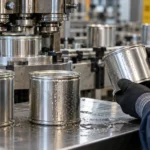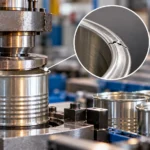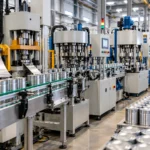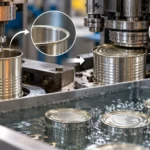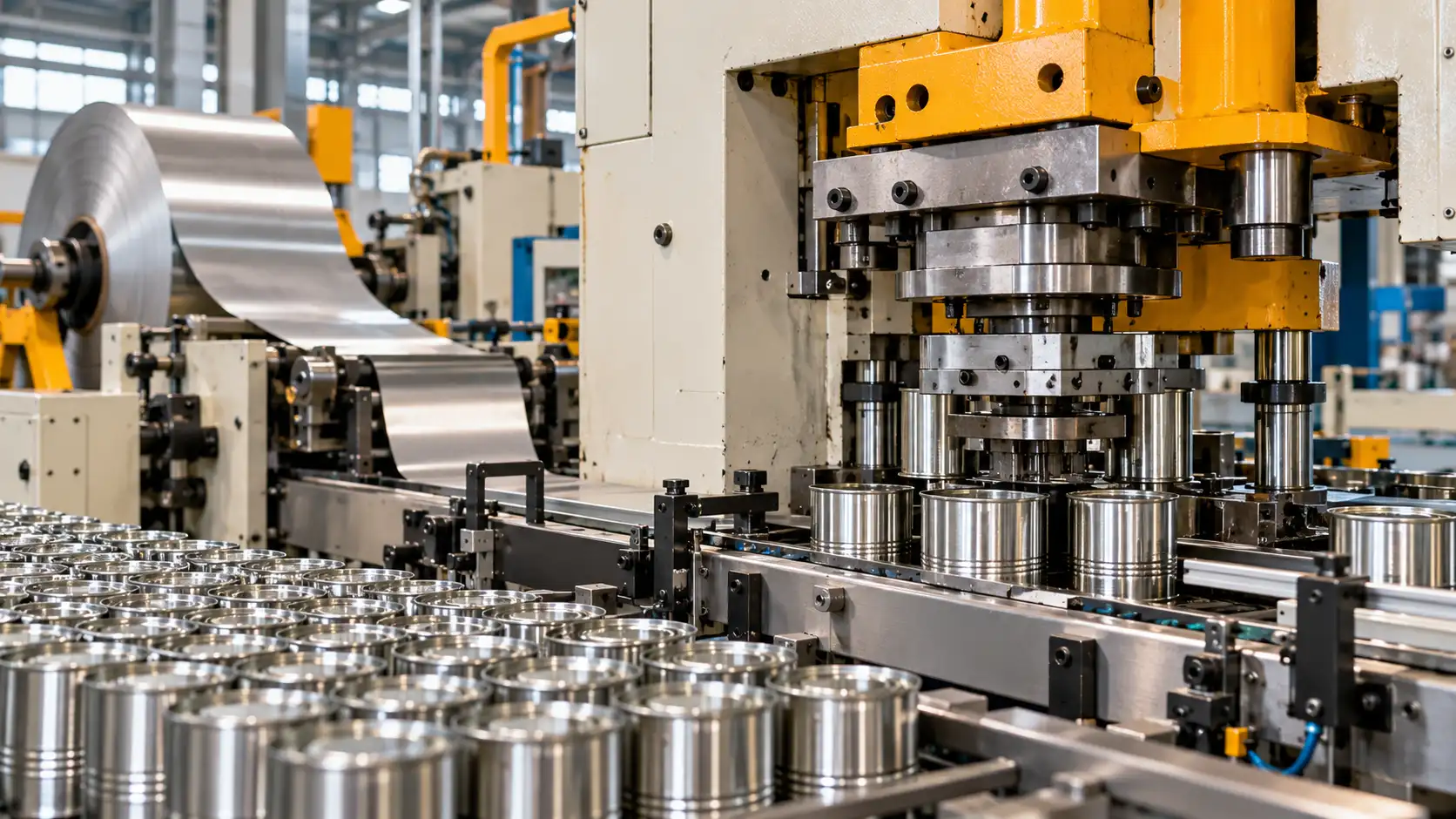
In metal packaging factories, a few seconds lost during each pressing cycle can result in hours lost by the factory in a month. There may be difficulties to hold output, particularly during high order periods due to manual feeding, poor handling and frequent stoppages.
This is one of the reasons why manufacturers are considering an automatic power press machine for repetitive metal forming processes. It’s more than just speed. The companies also demand uniformity of components, improved material handling, and a production process that is easier to control.
But, equipment upgrades are expensive. Manufacturers need to have an understanding of where automation can be of benefit, and if their current production requirements are met by the change.
What Is Changing Inside Metal Packaging Factories?
The production of metal packaging includes multiple operations such as cutting, forming, pressing and joining parts.
Power presses can be employed in various manufacturing processes like blanking, punching or forming metal parts, depending on the type of container being made.
Old presses may be valuable, especially for small quantities of work. Manual feeding and component removal, however, might hinder output if volumes of production increase.
Some of these repetitive tasks can be minimised by an appropriate feeding and handling system in an automatic setup.
This can help the manufacturing more predictable if the manufacturers make similar components in large quantity.
Five Reasons Manufacturers Are Considering Automatic Power Presses
1. Production Speed Is Becoming More Important
With a manually operated press, an operator must place the material, start the cycle and take the finished press part out.
These steps, in spite of the experience of the operator, are time consuming.
Manual intervention between cycles can be reduced by an automatic power press machine fitted with a suitable feeding press machine.
This can help increase production volume, if the tooling, material supply and downstream operations are capable of accommodating the increased production volume.
It is not so much the speed of the press but the efficiency of the entire operation.
2. Consistency Matters Across Large Production Batches
There are specified dimensional requirements that must be met for metal packaging components.
Many manufacturing processes follow forming, and small changes in the forming process can impact component fit for subsequent manufacturing process.
Some variations that can be caused by manual feeding can be reduced with automated feeding and controlled press cycles.
But, die condition, press alignment, material properties along with machine maintenance still affects dimensional accuracy.
While automation helps to ensure consistency, regular quality checks are not necessarily eliminated.
3. Manufacturers Want Better Control Over Material Handling
Handling metal sheets and formed components repeatedly can slow production and introduce additional risks.
Suitable automatic feeding arrangements can reduce the need for operators to position material manually during every cycle.
This may help manufacturers:
- Maintain a more consistent material supply.
- Reduce unnecessary handling between operations.
- Improve coordination between pressing and component collection.
- Allocate operators to monitoring and inspection activities.
These benefits depend on the machinery configuration and the type of metal components being produced.
4. Production Planning Becomes More Predictable
When manufacturers know the expected cycle time and operating capacity of their equipment, planning becomes easier.
They can estimate production requirements, organise raw materials and schedule maintenance more effectively.
An automatic press may support repeatable production cycles, although actual output depends on setup time, stoppages and operating conditions.
Predictability becomes particularly valuable when businesses handle recurring orders with similar component specifications.
5. Factories Are Preparing for Future Expansion
As a manufacturing company grows, there eventually comes a time when it has reached the limitations of its current manufacturing equipment.
Management may wish to consider automation rather than installation of additional manually operated stations to meet future production requirements.
The automatic power press machine can be a part of this development.
Nonetheless, the equipment choices must be made with a valid set of production projections instead of expectations for future demand.
What Should Manufacturers Consider Before Upgrading?
The purchase of an automatic press without consideration of the manufacturing process can bring about unnecessary expenses.
The businesses should first determine their technical and operational needs before contacting a power press machine manufacturer.
Important considerations include:
- Press capacity: The pressing capacity required should be the same as the pressing operation, and appropriate allowances should be determined according to the engineering assessment.
- Material specifications: The thickness of the sheet, the properties and dimensions of the materials used have an impact on the choice of equipment.
- The compatibility of the tooling: It may be necessary to make changes to the tooling in order to get it working with the new press configuration.
- Automatic feeding, component handling or other auxiliary equipment: Manufacturers need to decide the requirements for automation.
- Factory safety: All factory safety measures must be appropriate including guarding, interlocks, emergency-stop and factory training.
- Maintenance: Factory should have appropriate systems for periodic inspections, service and lubrication.
These factors are used to decide if the proposed equipment will function accordingly with the actual production.
Is an Automatic Power Press Always Better Than a Conventional Press?
Not necessarily.
If you have a very small production run or a lot of tool changes, or you only need to order limited quantities of a product, a traditional press can be viable.
With repetitive operations, the extra investment and setup requirements become more appealing when you can make the automatic equipment more attractive.
It should take into account production volume, complexity of the component, the amount of labour needed, and labour cost.
A reliable power press machine manufacturer should be able to describe the specifications of machine and assist the buyer to understand the suitability of the available machine.
Choosing Equipment That Matches Production Needs
Metal packaging manufacturers are looking at automation due to reliability of output, repeatable forming processes and enhanced production control.
Businesses need to consider their materials, tooling, safety needs and production volumes before choosing an automatic power press machine. Talk to an expert power press machine manufacturer can help to resolve these requirements.
Tinmaco (Unity Metals) produces power press machines as well as equipment for metal can production. Find the right machinery solutions for your industrial manufacturing needs by knowing more about our range.
Frequently Asked Questions (FAQs)
1. What is an automatic power press machine?
An automatic power press is industrial equipment used for metalworking operations such as punching, blanking or forming, with automated features that reduce manual involvement in selected production tasks.
2. How does an automatic power press improve manufacturing efficiency?
It can reduce repetitive material handling, support consistent operating cycles and improve production planning. Actual efficiency depends on the press configuration, tooling, material and production requirements.
3. Can automatic power presses be used in metal packaging manufacturing?
Yes. Depending on their specifications and tooling, power presses can be used to manufacture metal components required for packaging applications.
4. What safety precautions are necessary when operating a power press?
Power presses require suitable machine guarding, safety interlocks, emergency-stop systems, operator training and regular maintenance. Safety arrangements must comply with applicable regulations and machine requirements.
5. What should buyers check before selecting a power press manufacturer?
Buyers should evaluate press capacity, supported materials, tooling compatibility, automation features, safety provisions, maintenance requirements and available technical support before purchasing equipment.