Two tin packaging factories can have the same machines with the same number of workers and the same production objectives, but with very different results! In many cases, it’s the difference in the way their manufacturing floors are organised. If the machine for making tins is poorly positioned, it may cause unnecessary movement of material, limit the operator’s access and delay surrounding activities. The problems can seem insignificant when installing, but can be costly once in regular production.
A good floor plan should therefore be designed before machinery is installed, rather than after, for manufacturers installing a new unit.
Why Is Factory Layout More Important Than Available Floor Area?
If you have a large factory, you don’t necessarily have an efficient production.
It’s about how available space facilitates the transportation of materials, people and finished containers.
Think of a factory where the bodies are created at one end and then taken across the floor for flanging and then taken back towards the bodies area for seaming.
These machines may operate without problems, but the transfer of parts between them results in unnecessary handling.
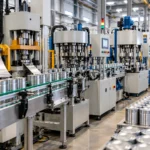
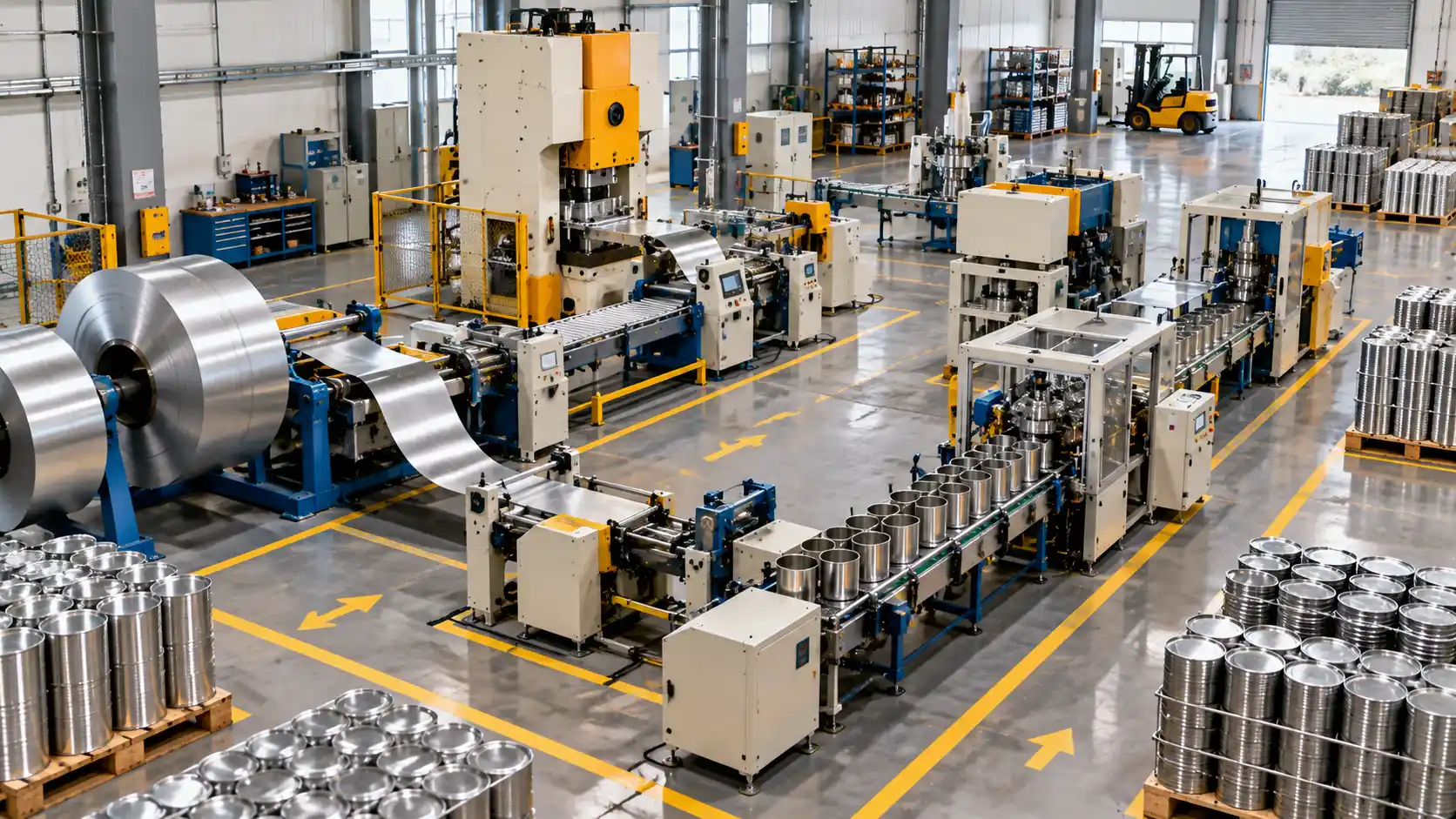
The following is a better arrangement, showing the manufacturing sequence.
This can help to minimize delays, enhance supervision and make day-to-day operations more manageable.
Start With the Production Process, Not the Machines
Manufacturers must first understand the flow of materials in the factory before making the decision as to where equipment should be placed.
In a typical 3-piece metal can manufacturing process, body preparation, forming, joining, flanging and seaming may be part of the process.
The specific process will vary according to the container design and the process of manufacture.
A practical planning exercise consists of identifying:
- The location of raw materials supply to the factory.
- What operation(s) need to be performed first?
- How unfinished components will be transferred from machine to machine.
- The placement of inspection areas and areas for rejected materials.
- The mode of transport for finished containers to dispatch or storage.
These movements, once mastered, make it easier to plan out equipment placement.
Five Layout Mistakes That Can Affect Tin Packaging Production
1. Positioning Machines Too Close Together
Manufacturers sometimes place equipment close together to save floor space.
However, every tin making machine requires sufficient clearance for operation, maintenance and safe access.
Crowded installations can make tooling changes difficult and restrict movement around the equipment.
Required clearances should follow machine specifications, safety requirements and applicable regulations.
2. Ignoring Material Movement
Unfinished can bodies might require to go through multiple operations to complete.
However, with uncoordinated machine arrangement, workers may have to spend unnecessary time transporting parts.
This can lead to congestion, multiple handling, and unnecessary delays during the production process.
3. Leaving No Space for Inspection
Inspection is crucial in the production of metal containers.
Inspection may be needed at various points as regards flange dimensions, seam formation, and other characteristics of the components.
If there is no demarcating space for inspection, it may be difficult for workers to distinguish good parts from bad.
4. Overlooking Maintenance Access
Industrial equipment needs regular servicing.
Technicians might struggle to access important parts if a machine is mounted in a wall or packed in with other machine.
When considering the position of equipment, manufacturers should consider maintenance access and tooling removal and safe isolation.
5. Planning Only for Current Production
A layout designed for contemporary machinery may prove to be limiting if production rises.
Enough space left for future equipment or changes in work flow can make addition or change easier.
But expansion plans must be realistic and based on the expectations of business needs.
How Should Different Machines Be Positioned?
This depends on the process of manufacture and the size of the building available.
As an example, flanging equipment should be placed where can bodies can be prepped without a lot of unnecessary motion.
Access to the components necessary to form the closure should be suitable to the seaming equipment.
Power presses require sufficient space for material feeding, tooling operations and removal of parts and safety measures.
The placement of each of the tins should be based on their purpose rather than just where it fits in the space.
Manufacturers should also take into account how operators are going to interact with equipment that they’ll need to be around.
What About Utilities and Workplace Safety?
Floor planning is more than just placing machinery.
Depending on the specifications of the industrial equipment, it may need electrical connections, compressed air or other utilities.
These requirements must be verified prior to installation.
Manufacturers shall also make suitable arrangements for:
- Electrical safety: Appropriate connection, protection and isolation devices.
- Machine guarding: Measures taken to guard around moving parts where these are potentially dangerous.
- Emergency access: Evacuation routes and access to emergency equipment are clear.
- Material storage: Areas that do not interfere with production or walkways.
- Ventilation and lighting: Conditions suitable for the manufacturing operations.
- Maintenance Activities: Safe access to provide maintenance and replace components.
A layout that makes for better movement with a loss of safety is not considered acceptable.
How Can Manufacturers Check Their Layout Before Installation?
Even during the simple design phase, a floor plan can help identify issues before equipment is delivered.
Manufacturers should make sure that the correct machine size is measured, that is, the size of space needed to operate and maintain the machine.
They can then create a diagram of how the material moves, and where it may get congested.
Another approach to the production sequence is to take a walk with the operators, maintenance staff and safety representatives.
In more involved installations, a qualified industrial layout professional can be of service in determining equipment positioning and utility needs.
Build a Layout That Supports Daily Production
An effective packaging unit for tins does not rely on just a reliable piece of machinery. The placement of the equipment, the safe access and organised movement of material all have an impact on production performance.
Manufacturers need to inspect the available floor space, operating requirements and full manufacturing procedure prior to installing a new tin making machine.
Tinmaco (Unity Metals) produces seaming machines, flanging machines and all the other types of equipment which are required in the metal can manufacturing process. Peruse our machinery stock and determine which machines are appropriate for your manufacturing needs.
Frequently Asked Questions
1. How much floor space is required for a tin can manufacturing unit?
Space requirements are dependent on the type and size of machinery, production quantities, material storage, operating clearances and safety. The area in each factory is not standard.
2. Should tin can manufacturing machines be arranged in a straight line?
Not necessarily. For some processes, straight lines may be appropriate, and for other factories, alternative layouts may be more beneficial. Greatest arrangement will actually vary depending on workflow, space and material flow.
3. Why is maintenance clearance important around industrial machines?
Maintenance clearance provides the ability to safely inspect, maintain and replace components. Poor access can result in more downtime and safety hazards.
4. Can poor factory layout increase production costs?
Yes. This not only adds unnecessary material handling time and operating costs, but also congestion, difficult maintenance access and inefficient workflows.
5. What should manufacturers check before installing tin can-making equipment?
Manufacturers should verify machine dimensions, operating clearances, utility requirements, material flow, safety arrangements, maintenance access and future expansion requirements.