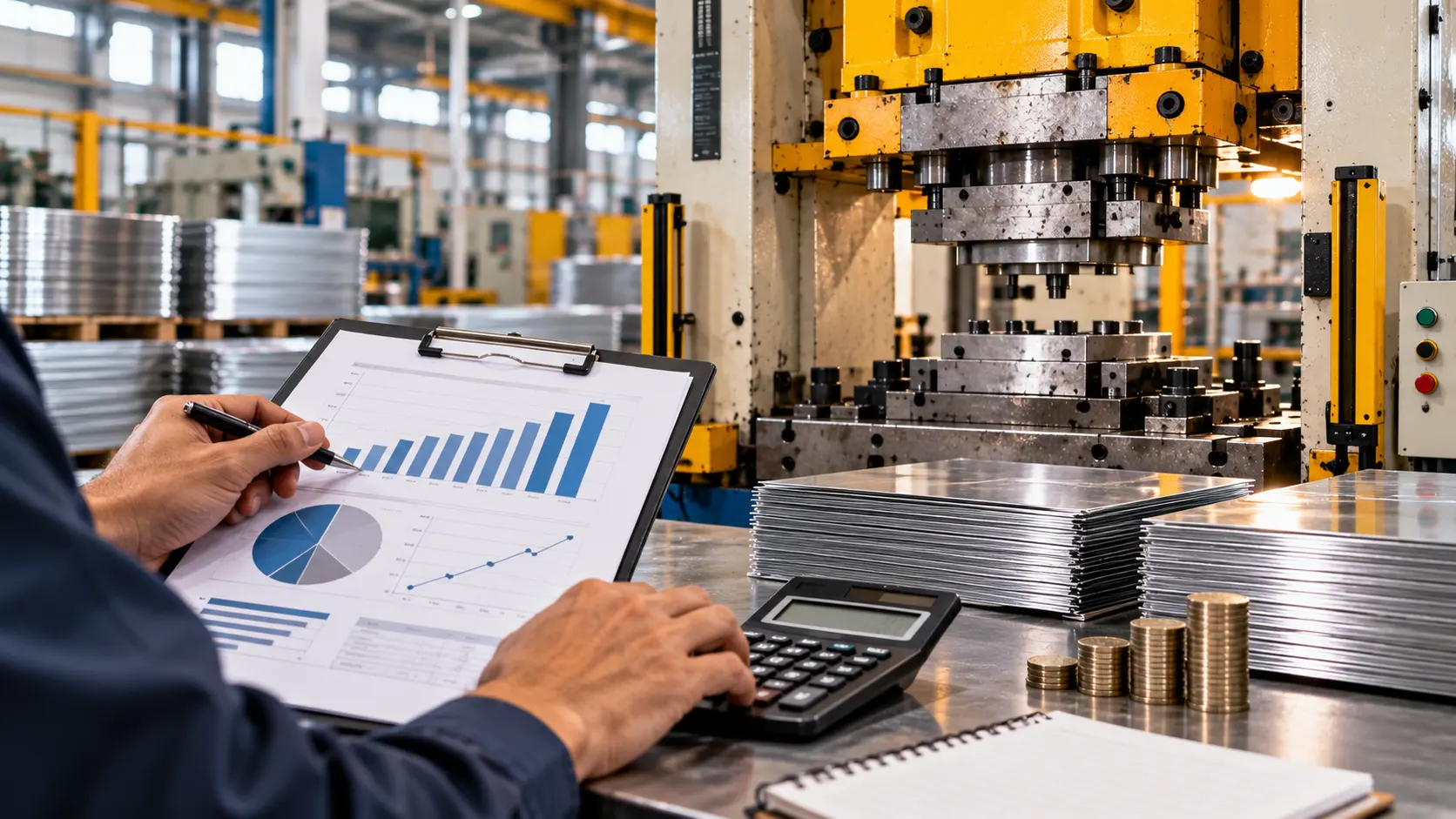
A new power press may promise faster production, fewer interruptions and better control over metal-forming operations. But how long will it take for those improvements to recover the money spent on the machine? That is the question manufacturers should answer before comparing any power press for sale. A machine with a lower purchase price is not necessarily the more economical choice, especially when installation, maintenance, operating costs and expected production benefits are considered.
Calculating the payback period helps businesses understand when their investment may recover its initial cost. It also provides a practical starting point for comparing machinery options.
What Is the Payback Period of a Power Press?
The payback period is the time required for an investment to recover its initial cost through the net financial benefits it generates.
For a manufacturing business, these benefits may come from reduced operating expenses, lower rejection rates or additional contribution from increased production.
The basic formula is:
Payback Period = Total Initial Investment ÷ Annual Net Cash Benefit
For example, if a new press requires an investment of ₹12 lakh and generates an estimated annual net cash benefit of ₹3 lakh, the simple payback period would be four years.
This calculation assumes the annual benefit remains constant.
It does not account for the time value of money, financing arrangements or changes in future cash flows.
Step 1: Calculate the Complete Investment Cost
The machinery quotation is only one part of the initial investment.
Manufacturers should calculate the total amount required to make the equipment operational.
Potential expenses include:
- Machine purchase price: The amount quoted by the equipment supplier.
- Transportation: Expenses associated with moving machinery to the factory.
- Installation: Costs of positioning, commissioning and preparing the equipment.
- Tooling: Dies and accessories required for the intended operations.
- Electrical arrangements: Any necessary power supply or infrastructure modifications.
- Operator training: Expenses associated with preparing personnel to use the equipment safely.
Not every purchase involves all these costs.
However, ignoring relevant expenses can make the expected payback period appear shorter than it actually is.
Step 2: Estimate the Annual Financial Benefits
A new press may improve production performance, but not every improvement automatically becomes a financial saving.
Manufacturers should separate measurable cash benefits from general operational advantages.
Reduced Operating Expenses
If the new equipment requires less manual handling or reduces certain recurring expenses, those savings may contribute to the investment return.
Only actual reductions in cash expenditure should be included.
Lower Material Rejection
Improved forming consistency may reduce rejected components when the existing process has quality-related problems.
The financial benefit should reflect the avoidable cost of those rejected components.
Additional Production Contribution
A faster press may increase output, but extra production creates financial value only when the business can sell the additional components or use the capacity profitably.
Manufacturers should calculate the contribution remaining after additional variable production costs, rather than treating increased sales revenue as pure profit.
Step 3: Work Through a Practical Payback Calculation
Consider a hypothetical sheet metal manufacturing unit planning to replace an older press.
The business estimates the following figures.
Initial investment
- New press and necessary tooling: ₹10,00,000
- Transportation, installation and training: ₹2,00,000
Total initial investment: ₹12,00,000
The company then estimates its annual financial benefits.
- Net operating cost savings: ₹1,20,000
- Reduced material rejection costs: ₹60,000
- Additional contribution from production: ₹2,40,000
Total annual benefits amount to ₹4,20,000.
Suppose the new equipment also creates ₹60,000 in additional annual maintenance and operating expenses.
Annual net cash benefit = ₹4,20,000 − ₹60,000 = ₹3,60,000.
Therefore:
Payback Period = ₹12,00,000 ÷ ₹3,60,000 = 3.33 years
The estimated payback period is approximately three years and four months.
These figures are illustrative, not actual machinery prices or guaranteed savings.
Step 4: Check Whether Your Estimates Are Realistic
A payback calculation is only as reliable as the assumptions behind it.
Before selecting a power press for sale, manufacturers should test what happens when production conditions change.
For example:
- What if additional customer orders do not materialise?
- What if maintenance expenses exceed expectations?
- What if the machine operates fewer shifts than planned?
- What if material rejection rates remain unchanged?
- What if installation takes longer than expected?
If the annual net benefit falls from ₹3.6 lakh to ₹2.4 lakh, the same ₹12 lakh investment would take five years to recover.
This simple comparison shows why optimistic assumptions can create misleading investment expectations.
Step 5: Look Beyond the Payback Period
Payback is useful, but it should not be the only purchasing criterion.
A machine with a shorter payback period may still have higher long-term operating costs or a shorter useful life.
Manufacturers should also consider equipment reliability, production suitability, safety requirements and maintenance needs.
For larger investments, financial measures such as net present value and total cost of ownership can provide a more complete assessment.
When comparing a power press for sale, technical compatibility should carry as much importance as the estimated financial return.
Making a Financially Sound Machinery Investment
The right press should meet production requirements while offering a realistic opportunity to recover the investment.
Before purchasing a power press for sale, calculate the full investment cost, estimate measurable cash benefits and test different operating scenarios.
Tinmaco (Unity Metals) manufactures power press machines for industrial metalworking applications. Explore our available machinery to assess equipment options for your production requirements.
Frequently Asked Questions (FAQs)
1. What is a good payback period for a power press?
There is no universal ideal period. An acceptable payback depends on the manufacturer’s investment policy, expected equipment life, financial position and production requirements.
2. Does the payback calculation include maintenance costs?
Yes. Additional maintenance and operating expenses should be deducted from annual financial benefits when calculating the net cash benefit.
3. Can higher production speed reduce the payback period?
Potentially. Higher output may improve financial returns if the additional production can be sold profitably or generates measurable cost savings.
4. What is the difference between payback period and ROI?
Payback period measures how long an investment takes to recover its initial cost. Return on investment measures financial gain relative to the amount invested over a defined period.
5. Should manufacturers choose the machine with the shortest payback period?
Not automatically. Equipment suitability, reliability, safety, maintenance requirements and long-term financial performance should also influence the purchasing decision.