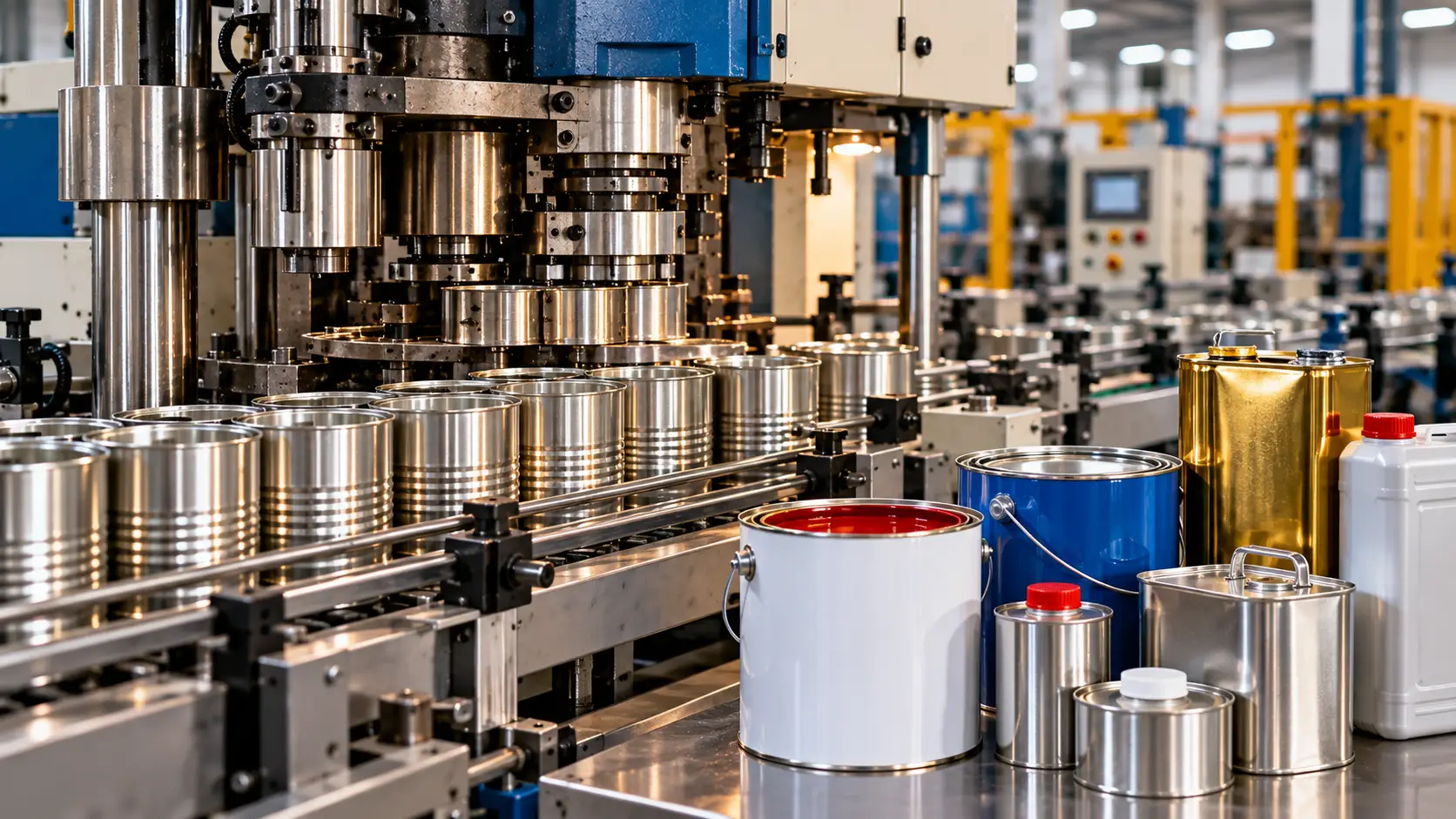
A paint tin on a hardware store shelf, and a metal container of industrial lubricant may appear to be the same, but the packaging needs may be vastly different. One has to resist repeated handling and the other must be compatible with the contents and be airtight during storage.
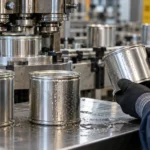
This is no different for packaging manufacturers who supply these industries with containers – consistency of dimensions is key. A metal-forming and joining machine for making containers includes a tin container making machine.
Even with the machines, though, it is not always a good idea to use a container for paint, oil or chemicals. All of these should be taken into account: the material, container design, the closure system and the contents of the container.
Why Do Paint, Oil and Chemical Products Need Different Packaging?
Metal containers are commonly used for products which need protection during handling, storage and transportation.
However, not all metal containers are suitable for containing all liquids.
The packaging requirements depend on the physical and chemical properties of the product.
Paint packaging
Containers of paint must have appropriate lids and closures to minimize leakage and contamination. They should also be designed for filling, handling and opening, etc.
Oil and lubricant packaging
Some oils and lubricants are stored in metal containers which must be compatible with the contents and appropriate for the conditions in which they are stored.
Chemical packaging
Special container materials, coatings, designs and regulatory approvals may be necessary for chemical products.
Certain chemicals are not suitable for metal containers. It is the responsibility of the manufacturer to check the compatibility of all tinplate packaging, not to assume all tinplate packaging is suitable.
Where Do Tin Containers Make Machines Fit Into Production?
A metal container undergoes various stages in its production before it can be filled.
Depending on the container’s shape, the exact process varies, but it might be cylindrical, rectangular, or some other shape.
A typical metal can manufacturing process could include:
- Body preparation: Cutting and shaping metal sheets to create the desired body form.
- Side seam joining: body formed by the joining method is a suitable manufacturing method.
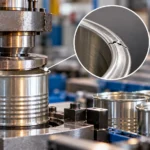
- Flanging: Open edge of the body is prepared for the can end.
- Seaming: The can end is joined to the preformed body by a mechanical process.
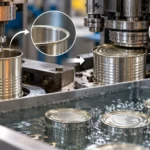
- Inspection of the finished parts: Dimensional and quality checks are conducted on components.
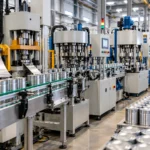
These operations are carried out by different machines.
The tin making machine can be used for a single step of the production process. It is typical for manufacturers to employ multiple compatible machines to create the finished container.
How Does Machinery Support Paint Container Manufacturing?
Metal containers are used in packaging paint, as is well known.
Whether it’s a decorative paint tin or an industrial package size, manufacturers require containers which come in various dimensions and closure requirements.
Maintaining Consistent Container Dimensions
Paint filling operations require containers that match the intended filling and handling equipment.
Variations in body dimensions or opening profiles can create difficulties during subsequent operations.
Suitable forming equipment helps manufacturers produce components according to the required specifications.
Preparing Container Edges for Closure
Many metal containers use mechanically attached ends.
Flanging machines prepare the body edge, while seaming machines join compatible ends to the container body.
Other paint container designs may use different closure arrangements, so machinery selection must reflect the actual packaging design.
Supporting Repeatable Production
Manufacturers supplying regular orders need consistency across production batches.
Correctly configured equipment can help maintain repeatable forming and joining operations, reducing unnecessary variation between components.
What Role Does Machinery Play in Oil Packaging?
Oil packaging presents its own manufacturing considerations.
Depending on the product, containers may be used for lubricating oils, industrial oils or other compatible liquid formulations.
During production, manufacturers must consider:
- Material compatibility: The metal and any internal coating must be suitable for the intended contents.
- Closure integrity: The container must meet the required sealing and leakage specifications.
- Dimensional accuracy: Openings, bodies and ends must fit correctly.
- Handling requirements: Container design must account for expected filling, storage and transportation conditions.
A suitable tin container making machine supports the production of metal components that meet the required design specifications.
However, final packaging suitability must be confirmed through appropriate testing.
Why Is Chemical Packaging More Demanding?
Chemical packaging requires particular care because the contents may be corrosive, reactive, flammable or otherwise hazardous.
The risks depend on the specific chemical formulation.
For example, a container suitable for one industrial chemical may be unsuitable for another because of corrosion or compatibility concerns.
Manufacturers should therefore evaluate:
- Chemical compatibility with the container material and lining.
- Required closure and leakage performance.
- Applicable packaging regulations and certifications.
- Handling and transportation conditions.
- Product-specific testing requirements.
Where dangerous goods regulations apply, the packaging may need approved designs and performance testing.
Machinery helps manufacture the container, but it does not automatically make the packaging compliant or chemically compatible.
Why Are Flanging and Seaming Important Across These Applications?
In both packaged products, the quality of closure may have an impact on the container performance.
In the case of conventional double-seamed metal cans, it is important to ensure that the flange is properly formed prior to the attachment of the end.
The end curl and body flange are then joined together by seaming equipment.
Seam defects can occur as a result of poorly formed components or errors in machine settings.
This means that tooling compatibility, dimensional inspection and periodic maintenance are crucial during production.
It is also important for manufacturers to keep in mind that not all paint, oil and chemical containers are double-seamed.
Choosing Machinery for Different Packaging Requirements
Manufacturers should determine container design, material thickness, production quantity and forming / joining processes before choosing the tin container making machine.
The equipment should be suitable, not only for the industry in which the final packaging will be used, but for the specification of the container.
Tinmaco (Unity Metals) develops and produces semi- and automatic seaming machines and metal can-making machinery, such as flanging machines. Discover our machinery portfolio for metal containers production, and identify products that meet your needs.
Frequently Asked Questions
1. Can the same tin container machinery be used for paint and oil packaging?
Equipment may be used for containers designed to hold other products as long as their size, material and production conditions are similar. The suitability of the machines and tools is dependent.
2. What machines are commonly used in metal container manufacturing?
The cutting ,body forming, flanging, seaming and other special machinery may be used in the production depending on the type of container.
3. Why is seaming important for liquid packaging?
For containers with double seamed ends, good seam formation is important to ensure good closure integrity. Appropriate sealing compound, materials and quality testing are also critical.
4. Are tin containers suitable for all industrial chemicals?
No. Any metal container can be used, depending on chemical compatibility, protective coatings and applicable regulations.
5. What should manufacturers consider before purchasing tin container machinery?
Some of the key factors are the size of the container, the thickness of the metal, the compatibility of the tools used, production capacity and maintenance needs, among others.